
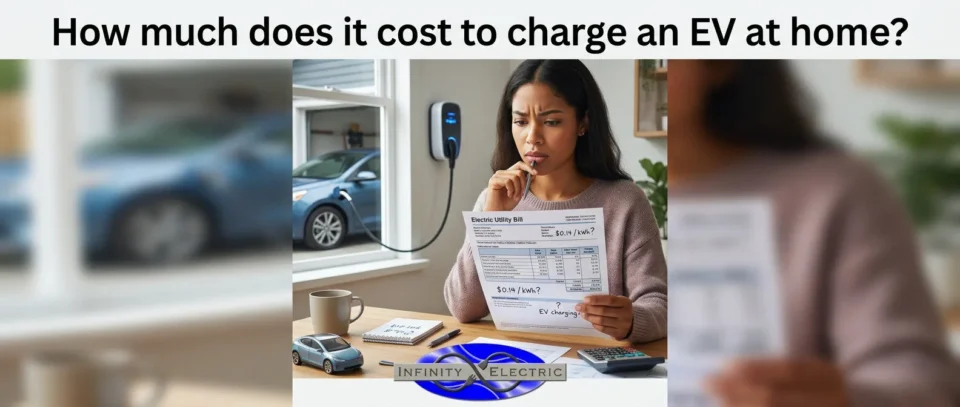
Charging an EV at Home: How Much Will Your Electric Bill Go Up?
Switching to an electric vehicle (EV) is a smart move for many. It offers environmental benefits and potential savings on fuel.
But what about the cost of charging at home? Many wonder how much their electricity bill will increase.
Installing a home EV charger can seem daunting. Understanding the costs involved is crucial for making an informed decision.
Several factors influence the cost increase, including charger type and local electricity rates.
This guide will help you navigate these considerations. We’ll explore the costs and benefits of home EV charging.
By the end, you’ll have a clearer picture of what to expect with a home EV charger.
Understanding Home EV Charging: Basics and Types
Home EV charging comes in two primary forms: Level 1 and Level 2 chargers. These are crucial for any EV owner.
Level 1 chargers are the most basic type. They use a standard 120-volt outlet. Charging with a Level 1 charger is slower, typically adding 2-5 miles of range per hour.
Level 2 chargers are more powerful, using a 240-volt outlet. These can add 10-60 miles of range per hour, making them a popular choice for home use.
Key Points:
- Level 1 Chargers: Standard 120-volt outlet, slower charging
- Level 2 Chargers: Requires 240-volt outlet, faster charging
Choosing the right charger depends on your needs and budget. Each charger type has its pros and cons. Consider efficiency, initial costs, and convenience when deciding.
Understanding these basics will guide you in selecting the suitable charger for your home. This decision impacts your charging efficiency and costs.
How Much Does Charging an EV at Home Really Cost?
Charging an EV at home is generally cost-effective, but the total cost depends on several factors. The key component is your local electricity rate.
The average electricity rate in the U.S. is about $0.13 per kWh. This figure varies significantly across regions, affecting your monthly bill.
For an average EV, expect to consume 30 kWh per 100 miles driven. This means your monthly costs can range from $30 to $60, depending on your driving habits.
Cost Breakdown:
- Local electricity rate: Influences total cost per kWh
- EV efficiency: Affects energy consumption per mile
- Driving habits: Determine total energy use and cost
Some utility companies offer special EV charging rates. This can lower your overall energy bill. Charging during off-peak hours can also reduce costs significantly.
Monitoring your electricity usage helps manage costs. Consider using smart meters to track real-time consumption.
Overall, home charging is cheaper than public stations. Understanding cost factors helps maximize savings.
Factors That Influence Your Home EV Charger Cost Increase
Several elements affect how much your electricity bill will increase with a home EV charger. First, the type of charger greatly influences energy use.
Level 1 chargers are less costly but charge slowly, while Level 2 chargers are more efficient and faster. The efficiency of both the vehicle and charger plays a role too.
Another factor is the local electricity rate, which varies by region. Higher rates increase the overall charging cost. Your driving habits also matter significantly.
Frequent and long drives demand more energy, impacting your bill. Additionally, charging during peak hours can lead to higher costs.
Key Influencing Factors:
- Type of charger: Level 1 vs. Level 2
- Electricity rates: Regional variations
- Driving frequency: Short vs. long distances
- Charging time: Peak vs. off-peak hours
- Vehicle efficiency: Energy consumption per mile
Understanding these factors is crucial for managing costs. Identifying which ones apply to you can help predict and control your expenses. Planning your charging schedule around these factors can also lead to cost savings.
Calculating Your Monthly and Annual Electricity Bill Increase
Determining the rise in your electricity bill from home EV charging involves a few calculations. Start by knowing your vehicle’s energy consumption rate.
Most electric vehicles use about 30 kWh per 100 miles driven. Next, factor in your driving habits. Track your average monthly and yearly mileage. Multiply this figure by the vehicle’s energy consumption rate.
For example, if you drive 1,000 miles monthly, your EV would use around 300 kWh. You can then apply your local electricity rate to this number.
U.S. average electricity is about $0.13 per kWh, but this varies. Find your specific rate on your utility bill. Multiply your total energy usage by the cost per kWh for the monthly cost.
Then, multiply by 12 for an annual estimate. Understanding these calculations provides a clearer view of the financial impact.
Calculation Steps:
- Determine vehicle energy consumption rate.
- Calculate average monthly mileage.
- Multiply mileage by energy consumption rate.
- Apply local electricity rate to usage.
- Estimate monthly and annual costs.
Careful calculation helps in budgeting and planning for future energy expenses.Comparing Home Charging vs. Public Charging Costs
Home charging an EV offers several financial benefits compared to public options. Although upfront costs may seem high, the per-charge expense is generally lower at home. This makes it an economical long-term choice.
Public charging stations can be costly due to service fees and pricing models. These often lead to higher expenses per kWh than home charging rates. Additionally, the convenience of home charging outweighs frequent trips to public stations.
Consider the cost differences between these options:
- Home charging: Generally cheaper per kWh, with more predictable costs.
- Public charging: Convenience comes at a premium, with potentially higher prices.
- Long-term savings: Home installations can offset initial costs with regular use.
Choosing the right strategy depends on your needs, habits, and financial goals.
Installation Costs: EV Charger Prices and Setup Fees
Setting up a home EV charger involves more than just buying the charger itself. Installation costs can add significantly to your initial outlay. Understanding these costs can help you make informed decisions.
A Level 2 charger, which most EV owners install at home, has a price range of $500 to $2,000. These chargers require a 240-volt outlet, similar to those used for an electric dryer, but often need professional installation.
Installation fees vary based on several factors. They can range from $300 to $1,200, depending on the complexity of the setup. Factors influencing the installation include the distance to the electrical panel, wiring needs, and required permits.
Here’s a breakdown of potential costs:
- Charger unit: $500 to $2,000.
- Installation fees: $300 to $1,200.
- Permits and upgrades: Variable, based on local requirements.
Local regulations and electrical upgrades might drive costs higher, so it’s crucial to get multiple quotes. Investing upfront can save you money in the long run by lowering your charging costs compared to public options.
Ways to Reduce Your Home EV Charging Costs
Reducing the cost of charging your electric vehicle at home can lead to considerable savings over time. There are several strategies to help you keep expenses down.
First, consider charging during off-peak hours. Many utility companies offer reduced rates for electricity consumed at night. This can significantly lower your monthly bill.
Investing in a smart charger can also help manage costs. These devices optimize charging by choosing the cheapest times to power your vehicle.
Here are some effective strategies:
- Charge off-peak: Take advantage of lower night-time rates.
- Use a smart charger: Automate cost-saving charging times.
Shop for electricity plans: Find plans tailored for EV owners.Finally, exploring solar power integration can offer long-term savings. Installing solar panels reduces reliance on grid electricity. Over time, this leads to lower charging costs and adds environmental benefits.
Incentives, Rebates, and Utility Programs
Many governments offer incentives to encourage the adoption of home EV chargers. These can include tax credits that offset purchase and installation costs.
Additionally, some states and localities provide direct rebates. These rebates reduce the upfront financial burden of a home charging system.
Utility companies often have special programs for EV owners. These can feature reduced rates or credits, which help lower your monthly costs.
Consider these benefits:
- Tax credits: Offsets the charger and installation expenses.
- Local rebates: Immediate reductions in setup costs.
- Utility programs: Access to special rates or financial credits.
Exploring these options can significantly ease the cost increase of installing a home EV charger.
Smart Charging, Solar Integration, and Future Trends
The integration of smart chargers can offer significant savings on electricity costs. These devices optimize charging times to utilize off-peak electricity rates.
Additionally, pairing an EV charger with solar panels creates an opportunity for green charging. This reduces reliance on grid electricity, further lowering costs.
Looking to the future, advancements in EV technology promise reduced costs and more efficient charging options.
Key points to consider:
- Smart charging: Automatic scheduling for cost efficiency.
- Solar integration: Lower energy bills with renewable sources.
- Future trends: Improved tech for more effective charging.
Frequently Asked Questions About Home EV Charger Costs
Many people have questions about the expenses related to home EV chargers. Understanding these costs can help in making informed decisions.
One common question is about the monthly increase in electricity bills. This increase varies based on charging habits and electricity rates.
Another inquiry is about installation expenses, which often depend on the type of charger and existing electrical setup.
Here’s a quick FAQ:
- How much will my bill go up? Depends on usage and rates.
- What are installation costs? Vary by charger and home setup.
- Are there ways to save? Yes, through incentives and smart charging.
Conclusion: Is a Home EV Charger Worth the Cost Increase?
Deciding on a home EV charger involves weighing costs and benefits. The initial expenses might seem daunting, especially with equipment and installation.
However, long-term savings often justify the investment. Charging at home is generally cheaper than using public charging stations, leading to reduced fuel expenses.
Moreover, the convenience of charging at home cannot be overstated. With potential savings on gasoline and possible incentives, many find home EV chargers a smart choice for the future. Consider your driving habits and local electricity rates to make the best decision. Investing in a home EV charger often pays off over time, enhancing convenience and efficiency.
Q&A
Question: How much will my monthly electricity bill increase if I charge an EV at home? Short answer: It depends on your mileage, your EV’s efficiency, and your local electricity rate. A typical EV uses about 30 kWh per 100 miles. Multiply your monthly miles by this rate, then by your electricity price (the U.S. average is about $0.13/kWh, but it varies). For example, 1,000 miles/month uses roughly 300 kWh, which would cost about $39/month at $0.13/kWh. Your actual cost can be higher or lower based on local rates, your car’s efficiency, and when you charge.
Question: Should I get a Level 1 or Level 2 home charger? Short answer: Choose based on how quickly you need to refill range and your budget. Level 1 (120V) adds about 2–5 miles of range per hour—often fine if you drive modest daily distances and can charge overnight. Level 2 (240V) adds roughly 10–60 miles per hour, making it better for faster turnarounds, higher daily mileage, or multi-driver households. Weigh convenience and speed against the higher upfront cost and installation needs of Level 2.
Question: What does it cost to buy and install a Level 2 charger at home? Short answer: Expect the charger itself to cost about $500–$2,000, plus installation fees of roughly $300–$1,200. Final costs depend on factors like distance to your electrical panel, wiring needs, permits, and any required electrical upgrades. Local regulations can affect pricing, so get multiple quotes before proceeding.
Question: How can I reduce my home EV charging costs? Short answer: Charge during off-peak hours, use a smart charger to automate the cheapest times, and consider electricity plans tailored for EV owners. Some utilities offer special EV rates or credits. Monitoring your usage (for example, via smart meters) helps you track and optimize costs. Over the long term, integrating solar can further cut grid electricity use and lower charging costs.
Question: Is home charging cheaper than public charging? Short answer: Generally yes. Home electricity rates are typically lower and more predictable, while public stations often add service fees and use pricing models that raise the per-kWh cost. Although a home setup has upfront costs, regular at-home charging usually delivers lower ongoing costs and greater convenience compared to frequent public charging.