If your insurance company recently told you that you need to replace your electrical panel and it’s a Zinsco, you’re not alone.
We’re seeing this more and more. Homeowners are receiving letters stating their policy will not be renewed unless the panel is replaced. For many, it comes as a surprise, especially if they’ve never experienced an obvious electrical issue.
So what’s actually going on?
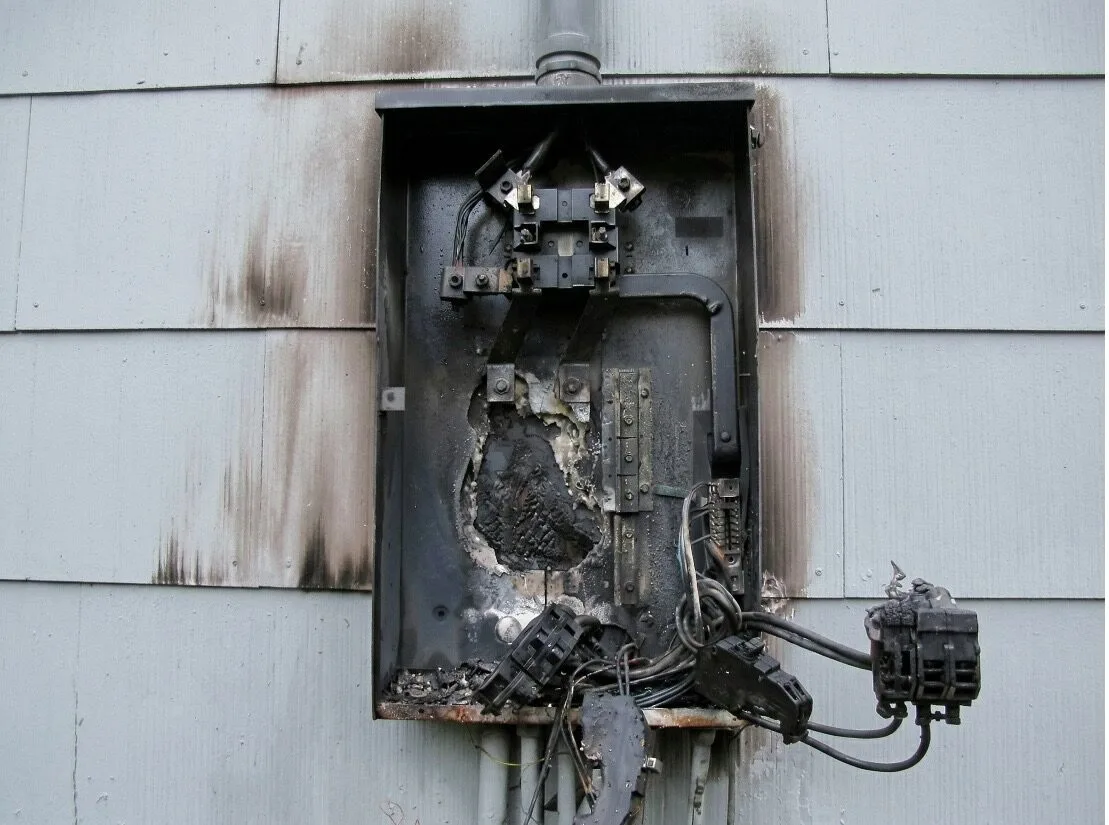
Zinsco panels were widely installed in homes from the 1960s through the early 1980s. Over time, they’ve developed a well-documented history of breaker failure, overheating, and electrical fires. Because of that track record, many insurance carriers now require full replacement before issuing or renewing coverage.
If you’ve received a notice, here’s what you need to know.
What’s Wrong with Zinsco Panels?
The core issue is breaker reliability.
A properly functioning breaker is designed to trip when a circuit becomes overloaded or shorted. That trip is what prevents wiring from overheating and potentially starting a fire.
With Zinsco panels, breakers have been known to:
• Fail to trip under overload
• Remain energized even when switched off
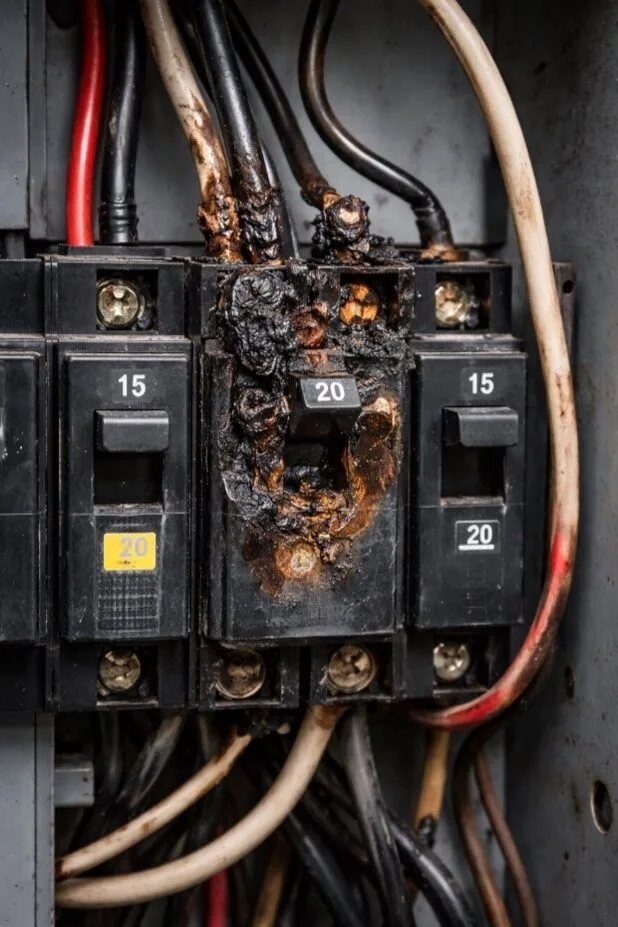
• Melt or fuse to the internal bus bar
• Cause arcing inside the panel
The underlying problem is tied to the panel’s bus bar design and aging internal components. As these systems age, heat and corrosion increase the likelihood of failure.
From a safety standpoint, that’s not something insurers are willing to overlook.
Other Electrical Panels Insurance Companies Commonly Flag
Zinsco is not the only panel insurance companies consider high risk. Several other older brands have documented safety concerns and are frequently flagged during underwriting.
Federal Pacific Electric (FPE) / Stab-Lok
Federal Pacific panels, often labeled “FPE” or “Stab-Lok,” were installed in millions of homes from the 1950s through the 1980s.
These panels are widely known for breakers that fail to trip during overload conditions. Independent testing over the years has shown significant failure rates. When a breaker fails to trip, wiring can overheat without protection.
Because of this documented history, many insurers require full replacement of Federal Pacific panels.
Challenger Panels
Challenger panels were common in the 1980s and 1990s. Certain models have a history of overheating breakers and bus bar issues, and some Challenger breakers were recalled.
Even though not every Challenger panel is automatically dangerous, many insurance companies now take a conservative approach and require replacement rather than evaluating individual components.
Pushmatic (Bulldog) Panels
Pushmatic panels, also known as Bulldog panels, are typically found in homes built in the 1950s and 1960s. They use push-button breakers instead of modern toggle switches.
The primary concern with Pushmatic systems is age and outdated design. Replacement parts are limited, and the panels lack modern safety features found in today’s equipment. Because of that, insurers may require upgrades during policy renewal.
Why Insurance Companies Are Requiring Replacement
Insurance underwriting is based on long-term risk data, not whether a panel appears to be functioning normally today.
When certain equipment shows a history of breaker failure, overheating, or fire claims, insurance carriers adjust their requirements. Even if your panel has never caused visible problems, the concern is about documented performance history across thousands of homes.
In simple terms, it becomes a liability issue.
Homeowners across the country are being told to:
• Replace the panel before policy renewal
• Provide proof of replacement
• Or risk cancellation or non-renewal
Once a panel type is flagged, replacement becomes the standard solution.
Can You Repair One of These Panels Instead of Replacing It?
No.
Replacing individual breakers does not correct the underlying design flaws found in panels like Zinsco or Federal Pacific. The issue lies in how the breakers connect to the bus bar and how the system responds under overload conditions.
Aftermarket breakers do not eliminate the structural problems within the panel. In most cases, insurance companies will not accept partial repairs.
If one of these panels has been flagged, full replacement is the proper and permanent solution.
How to Identify a Zinsco, Federal Pacific, Challenger, or Pushmatic Panel
These panels were commonly installed between 1950 and 1985, with Challenger appearing into the 1990s.
You may notice:
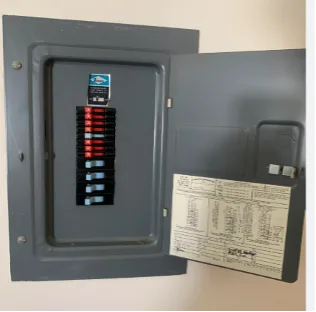
• The name “Zinsco” or “Sylvania-Zinsco”
• The label “Federal Pacific” or “FPE” with “Stab-Lok” breakers
• Push-button style breakers (Pushmatic)
• Distinctive colored breaker handles, often red or blue (Zinsco)
• An older home with original electrical equipment
If there’s any uncertainty, a licensed electrician can confirm the panel type quickly.
What Panel Replacement Typically Involves
Replacing one of these outdated panels means removing the equipment entirely and installing a modern breaker panel that meets current electrical code.
The process typically includes:
• Removing the existing panel
• Installing a new main service panel
• Replacing all breakers
• Inspecting and updating grounding and bonding
• Pulling permits
• Scheduling and passing inspection
If the home still has 100 amp service, many homeowners choose to upgrade to 200 amps at the same time. With today’s electrical demands such as EV chargers, HVAC systems, and electric appliances, 200 amp service has become the modern standard.
Most panel replacements are completed in one day.
What Happens If You Delay?
If your insurance company has given you a deadline, failing to act can result in:
• Policy cancellation
• Difficulty obtaining new coverage
• Delays during a home sale
• Potential complications with future claims
Once a panel has been formally flagged, it typically does not resolve without replacement.
What Does It Cost to Replace a Zinsco or Other Hazardous Electrical Panel in Ventura County?
The cost to replace a Zinsco, Federal Pacific, Challenger, or Pushmatic panel varies depending on the home. Most homeowners can expect a range between $3,000 and $5,500.
Several factors affect the final price:
Service size
If the home already has 200 amp service and you’re simply replacing the panel, costs are typically on the lower end. Upgrading from 100 amp to 200 amp service increases the price due to additional equipment and utility coordination.
Utility and meter requirements
Some upgrades require a new meter base or coordination with the power company.
Grounding and bonding updates
Older homes may not meet current grounding standards. Bringing the system up to code is part of a proper replacement.
Permit and inspection fees
Panel replacements require permits and inspection to meet current electrical code.
Condition of existing wiring
If damaged conductors, corrosion, or other issues are discovered, additional corrections may be necessary.
Replacing one of these panels is not a cosmetic upgrade. It is a safety upgrade designed to eliminate a known fire risk and bring the home up to modern standards.
If you’ve received an insurance deadline, scheduling an evaluation early gives you time to review options and avoid last-minute pressure.
The Bottom Line
Panels such as Zinsco, Federal Pacific, Challenger, and Pushmatic are not automatically failing in every home. However, they have a documented history of malfunction serious enough that insurers now consider them unacceptable risk.
If you’ve received a notice, the right move is to have the panel evaluated and replaced properly. A modern electrical panel not only satisfies insurance requirements, it brings your home up to current safety standards and eliminates a known fire concern.
Addressing it now protects both your coverage and your property.
Panel Replacement in Ventura and Surrounding Areas
If your insurance company has required you to replace a Zinsco, Federal Pacific, Challenger, or Pushmatic panel, we provide full panel replacement services throughout Ventura and nearby communities.
We handle:
• Permit coordination
• Utility scheduling
• 100 amp to 200 amp upgrades
• Code-compliant installation
• Final inspection approval
We serve homeowners in:
Ventura
Oxnard
Camarillo
Thousand Oaks
Santa Barbara
Ojai
Port Hueneme
If you’ve received a cancellation notice or renewal deadline, contact us to schedule an evaluation before your insurance cutoff date.